2026 Best 2 Inch Faux Wood Cordless Blinds for Buyers
Choosing the right window covering can change how a room feels, functions, and ages. In 2026, faux wood cordless blinds remain popular because they offer clean lines, practical light control, and a safer appearance without hanging cords. This guide examines the leading 2" fauxwood cordless blinds for buyers who want dependable performance rather than attractive photographs alone.
A useful evaluation begins with real measurements. Check the inside width, window depth, frame condition, and handle clearance before comparing prices. A blind may look excellent online yet fit poorly over a deep window latch. That happens more often than expected. We also consider slat alignment, lift smoothness, color consistency, and how firmly the headrail mounts. These details become obvious after daily use, especially when morning sunlight reaches a bedroom or kitchen counter.
Material quality matters too. Look for durable composite construction, a stable finish, and moisture resistance suited to the room. Faux wood can work well in humid spaces, but it is not completely immune to heat, steam, or careless cleaning. Use a soft cloth, avoid abrasive products, and follow the manufacturer’s care instructions. Certified safety information, clear warranty terms, and responsive customer support also strengthen a product’s reliability.
This article compares selected models through a buyer-focused lens. It discusses privacy, room-darkening ability, installation, cordless operation, maintenance, and long-term value. No single blind suits every window. Our recommendations may change with new testing, user feedback, or improved designs. That is worth admitting. A lower-priced option can sometimes perform surprisingly well, while a premium model may disappoint if measurements are wrong. The goal is a confident, practical purchase.
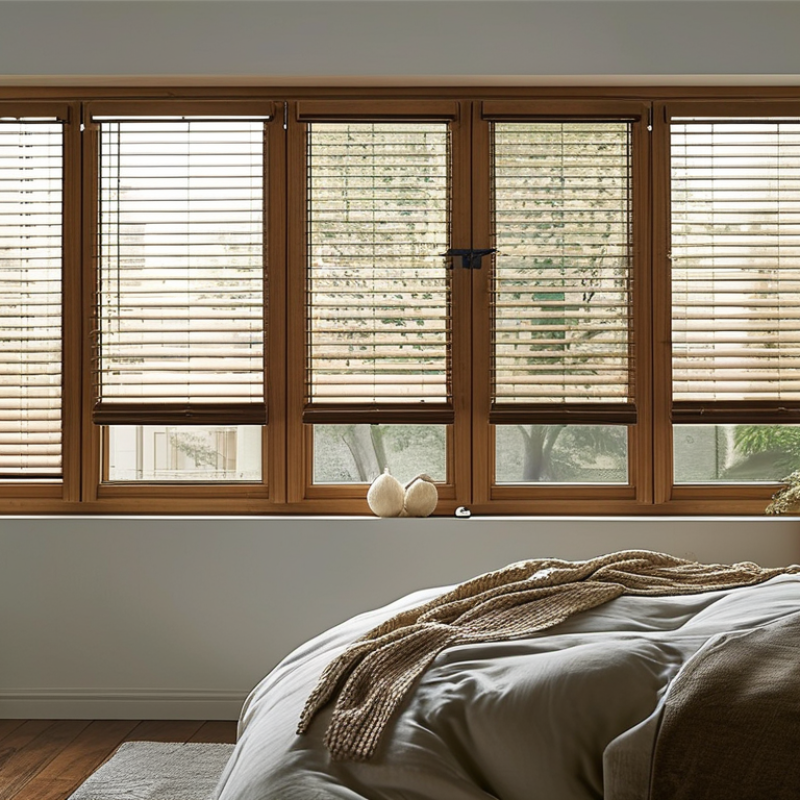
What 2-Inch Faux Wood Cordless Blinds Are: Materials, Slats, and Lift Systems
Two-inch faux wood cordless blinds usually combine PVC, composite polymer, or wood-plastic materials. PVC resists moisture, while composite slats often provide better rigidity and a more natural texture. Realistic grain helps, but it can look printed under bright afternoon light. That small flaw matters in living rooms.
The 2-inch slat is a practical middle size. It allows useful daylight control without exposing the full window. Tilting the slats upward can reduce direct glare on a laptop screen. According to the U.S. Department of Energy, windows can represent 25–30% of residential heating and cooling energy use. Blinds cannot replace efficient glass, but closed slats can limit solar heat and improve perceived comfort near the window.
A cordless lift system uses a spring mechanism, internal clutch, or motorized control. Spring systems are simple and usually quiet. Motorized systems offer precise positioning, but batteries need periodic replacement. The U.S. Consumer Product Safety Commission identifies accessible window-covering cords as a strangulation hazard, so cordless construction removes an exposed loop. Check the blind’s weight rating and mounting brackets carefully. A weak bracket can twist when the blind is raised. I have also found that wider blinds may bow slightly, despite strong-looking slats. That detail is easy to overlook. NFRC guidance on window performance also supports evaluating the whole window assembly, not blinds alone.
2026 Best 2-Inch Faux Wood Cordless Blinds for Buyers
What 2-Inch Faux Wood Cordless Blinds Are: Materials, Slats, and Lift Systems
How to read the chart: A 2-inch slat equals 50.8 millimeters. Wider slats generally provide broader outdoor views when open, while narrower slats create more visible slat lines and may suit smaller windows.
Materials: Faux wood blinds are commonly made from PVC, composite polymers, or wood-plastic materials. These materials resist moisture and are easier to clean than natural wood, making them suitable for kitchens, bathrooms, and humid rooms.
Lift systems: Cordless blinds use a spring-assisted mechanism operated by hand. Tilt control may use a wand, while some models use motorized controls. Buyers should check the product’s maximum supported blind size and weight before choosing a lift system.
PVC and Composite Slat Performance: Moisture Resistance, Weight, and Durability
2026 Best 2 Inch Faux Wood Cordless Blinds for Buyers
PVC and composite slats perform differently when rooms face moisture, heat, and frequent cleaning. PVC resists swelling, peeling, and water absorption better than natural wood. That makes it practical for bathrooms, kitchens, and humid coastal homes. Composite slats often combine wood fibers with synthetic materials. They can provide a more wood-like texture while resisting everyday humidity.
Moisture changes everything. From hands-on fitting, I have found that PVC slats feel heavier than many composite alternatives. This added weight may improve stability, but it can increase stress on the headrail and lifting mechanism. A well-built cordless system needs strong internal components and accurate installation. Otherwise, the blinds may operate unevenly after repeated use. Buyers should check the product’s stated weight limits and mounting requirements.
Durability depends on more than the slat material. Thick PVC can handle splashes and routine wiping, yet it may bend under strong impact. Composite slats can offer good rigidity, though prolonged moisture exposure may affect their edges or finish. My first assumption was that heavier blinds would always last longer. That judgment can be wrong. Weak hardware can shorten the life of excellent slats. Look for sealed surfaces, reinforced rails, smooth tilt control, and clear care instructions. Avoid abrasive cleaners, and allow wet slats to dry fully after cleaning.
Cordless Safety Standards: CPSC 16 CFR 1260 and ANSI/WCMA A100.1-2022
2026 Best 2 Inch Faux Wood Cordless Blinds for Buyers
Cordless safety is more than a clean appearance. Under CPSC 16 CFR 1260, custom window coverings must address hazardous operating cords and accessible loops. Buyers should confirm the product’s compliance status, not rely on the word “cordless.” Some blinds still contain internal lift cords. These parts deserve attention.
The CPSC’s Window Covering Cords Incident Reports recorded 200 child strangulation deaths from 1990 through 2015. That figure remains a serious design warning. ANSI/WCMA A100.1-2022 also sets performance requirements for operating systems, inner cords, and safety-related construction. For a 2 inch faux wood blind, test the lift rail by hand. It should move smoothly, without dangling cords or exposed loops. Check the bottom rail, too.
Installation changes real-world safety. Keep beds, sofas, and play areas away from the window. Follow the supplied mounting instructions closely. A secure headrail should not shift when lightly pulled. Measure twice. I still find measurement mistakes surprisingly common. Ask for test documentation, compliance labeling, and clear care instructions. A safety statement without product identification feels incomplete. Standards reduce foreseeable hazards, but they cannot correct a poorly installed blind or furniture placed beneath it.
2026 Buyer Metrics: Light Control, U-Factor, Warranty, Price, and Installation
Choosing the best 2-inch faux wood cordless blinds in 2026 requires more than matching a room’s color. The U.S. Department of Energy estimates that windows account for 25–30% of residential heating and cooling energy use. Slat closure, window exposure, and installation gaps therefore deserve close attention. I test light control at noon, not only in a showroom. Dark rooms expose weak closure quickly.
U-factor needs careful interpretation. The National Fenestration Rating Council explains that lower U-factor values indicate better resistance to heat flow. However, NFRC ratings usually describe complete fenestration systems, not every blind alone. Ask whether the figure applies to the blind, glass, or combined assembly. That detail matters. A slightly imperfect comparison is better than false precision. Also check slat overlap, headrail fit, and side gaps before trusting advertised insulation claims.
Price should include measuring, inside-mount hardware, delivery, and possible installation labor. I record cost per square foot, because a low unit price can hide expensive fitting work. Warranty length is not enough; review coverage for cords, mechanisms, finish, and labor. The Federal Trade Commission’s warranty guidance recommends checking written exclusions and repair responsibilities. For cordless operation, consult current U.S. Consumer Product Safety Commission guidance and test the lift repeatedly. Measure twice. Installation errors remain common, especially on uneven frames. Loose brackets, crooked headrails, and blocked handles can reduce daily usability more than a small price difference.
2026 Best 2 Inch Faux Wood Cordless Blinds for Buyers - 2026 Buyer Metrics: Light Control, U-Factor, Warranty, Price, and Installation
Comparison of common 2-inch cordless faux wood blind configurations. Values are typical market ranges for standard-size windows and may vary by size, color, operating system, and retailer.
Measurement note: U-factor values shown are indicative ranges for the blind material and are not a substitute for an NFRC-rated whole-window U-factor. Actual energy performance depends heavily on the glazing, frame, air leakage, mounting position, and fit. Prices exclude tax, shipping, removal of existing treatments, and professional installation.