
How to Choose Gym Machines for Your Business?

Choosing Gym Machines for a business requires more than comparing prices and glossy product images. Equipment must match your members, available space, training goals, and daily operating demands. A boutique studio may need compact cable systems and adjustable benches. A large fitness club may require treadmills, selectorized strength machines, racks, and recovery equipment. Each choice affects member experience, revenue potential, maintenance workload, and long-term safety.

Start by studying how people will use the facility. Beginners may prefer clear instructions, stable movement paths, and simple adjustment points. Experienced members often expect heavier resistance, smooth performance, and varied training options. Measure doorways, ceiling height, flooring strength, and electrical capacity before placing an order. A treadmill that fits on paper may block an emergency route or create uncomfortable traffic around the workout area. Small details matter.

Reliable purchasing also means checking warranties, spare-part availability, service response times, and supplier credentials. Ask for demonstrations and inspect noise levels, upholstery seams, cables, grips, and adjustment mechanisms. Recognized safety requirements should guide the review, but compliance alone does not guarantee a good business decision. A machine can be technically sound yet unpopular with members. That is an expensive lesson. Reviewing usage data after installation can reveal which equipment earns its space and which purchase needs reconsideration. Careful planning is valuable, but flexibility matters too. Fitness trends change, and no equipment plan is perfect.
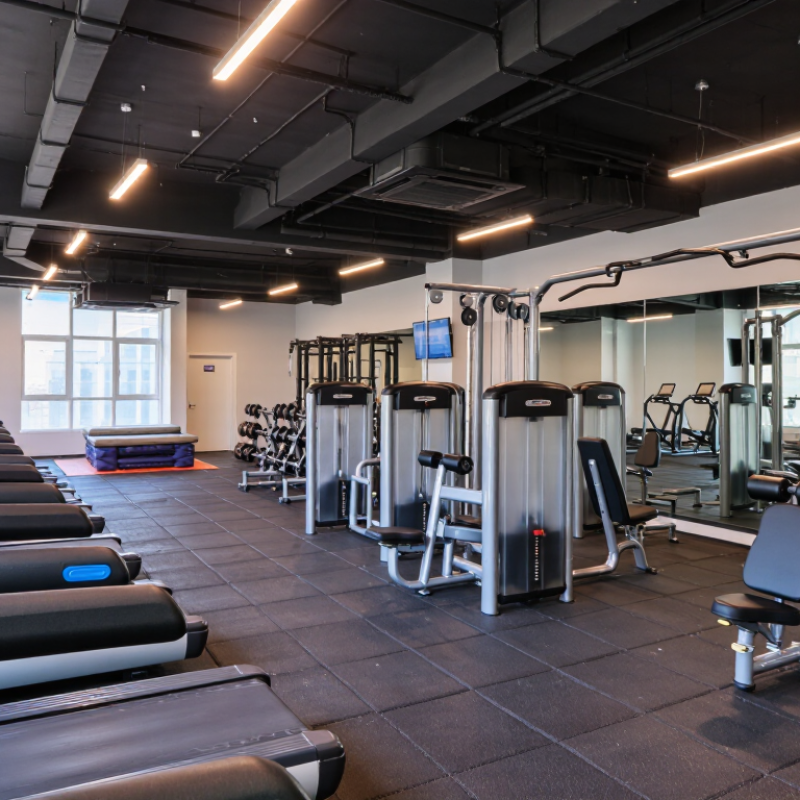
How to Choose Gym Machines for Your Business?

Define Your Gym’s Business Model and Member Needs

Choosing gym machines starts with defining how your facility earns revenue. A low-cost, high-volume gym needs durable machines, simple controls, and fast member turnover. A coaching-led studio needs fewer machines, but more adjustable and functional equipment. A premium club may justify recovery zones, performance tools, and connected consoles.

Member needs should guide every purchase. The Health & Fitness Association’s 2024 Global Report recorded 72.9 million U.S. fitness facility members in 2023. That scale reflects a broad audience, not one training style. Beginners often need clear instructions and stable resistance machines. Older members may value low-impact cardio and easy access. Experienced users may expect heavier loads, cable systems, and precise adjustments.

Walk through the floor during peak hours. Watch where queues form.

Digital expectations also matter. ACSM’s 2025 Worldwide Survey of Fitness Trends ranked wearable technology first, mobile exercise apps second, and programs for older adults third. This suggests that machines should support measurement, guidance, or inclusive use. Still, connectivity is not automatically valuable. A screen can become expensive decoration if members ignore it. I would test one unit before ordering ten. That is slower, but safer.

Do not copy another gym’s equipment list. A small facility may need two reliable treadmills instead of six rarely used machines. Track usage, repair time, member requests, and canceled memberships for three months. Then revise the plan. Mistakes reveal demand, if you measure them honestly.

Assess Available Space, Layout, and Facility Requirements

How to Choose Gym Machines for Your Business?

Available space should guide your equipment choices, not the other way around. Measure the usable floor area, ceiling height, door widths, and delivery route before placing an order. A machine may fit on paper but fail at the entrance or block a service corridor. Leave enough clearance for users to move safely and for technicians to reach adjustment points. Crowded aisles create avoidable risks.

Draw the layout with walking paths, training zones, storage, reception, and emergency exits. Keep high-traffic machines away from narrow doorways. Place heavier equipment on suitable flooring and check the floor’s load capacity with a qualified building professional. Consider ventilation, lighting, power outlets, and noise transfer between rooms. A facility that feels hot or cramped will discourage members, even when the equipment is technically excellent.

Think about daily operations, not just opening day. Staff need space to clean surfaces, inspect cables, and replace worn parts. Members with different mobility needs may require wider routes and easier access. Confirm local accessibility, fire safety, electrical, and occupancy requirements before installation. A common mistake is using every available square metre. It looks efficient at first. Later, maintenance becomes difficult, group classes lose flexibility, and members feel uncomfortable. Recheck the plan with staff and several users; their practical feedback may expose problems that measurements miss.

Compare Machine Types, Features, and Training Functions

How to Choose Gym Machines for Your Business?

Compare Machine Types, Features, and Training Functions

Choosing gym machines starts with understanding your members, available space, and training goals. I have found that one machine rarely serves every user well. Selectorized machines offer guided resistance and simple adjustments for beginners. Plate-loaded machines often provide a stronger lifting feel for experienced members. Cable systems support pressing, pulling, rotation, and rehabilitation movements. Cardio machines require separate evaluation because noise, power use, and maintenance can affect daily operations.

Space matters. A compact cable station may replace several single-purpose machines. However, it can create queues during busy hours. Look at seat adjustment, weight increments, grip options, and emergency stops. These features influence safety and workout quality.

Training function matters more than appearance. A chest press should allow a natural shoulder position. A leg machine should support stable alignment without forcing awkward movement. Test the movement yourself.

Durability also depends on frame construction, upholstery, bearings, and service access. Ask for maintenance schedules and load ratings before purchasing. A machine with many settings may seem flexible, but complicated controls can discourage new members. That assumption can fail. Watch real users perform basic exercises, not just demonstrations. Leave clear walking space around each station. Review usage data after installation, then move or replace equipment when patterns reveal weak demand. Practical observation often beats an attractive showroom layout.

Calculate Equipment Costs, Durability, and Maintenance Needs

Buying gym machines requires more than comparing purchase prices.

Calculate the full equipment cost before approving an order. Include delivery, installation, floor protection, staff training, spare parts, and expected repairs. A machine priced at $3,000 may cost much more over five years.

Estimate maintenance by checking service intervals and replacement prices for cables, belts, pads, and bearings. Keep a simple spreadsheet for each machine.

Durability depends on construction, usage, and cleaning routines. A busy facility may record hundreds of daily repetitions on one cable station.

Inspect welds, adjustment pins, seat frames, and moving joints during a practical test. Ask for load ratings, warranty terms, maintenance manuals, and service response times.

I once selected equipment with attractive pricing but ignored replacement pad costs. That decision created avoidable downtime.

The lesson still matters: cheap equipment can become expensive when heavily used.

Tips:

Test machines with different body sizes before purchasing.
Listen for unusual noise.
Check whether staff can access service points safely.
Create a weekly inspection checklist and record every repair.
Leave space around each unit for cleaning and technician access.
Review actual maintenance costs after three months, then adjust future purchasing plans.

Some estimates will be wrong.

That is useful data.

Select Suppliers and Build a Balanced Gym Machine Plan

Choosing gym machines starts with supplier quality, not a glossy catalogue. IHRSA’s 2024 Global Report recorded about 184 million fitness members worldwide in 2023. That scale increases pressure on uptime, maintenance, and replacement parts. Ask suppliers for service response times, warranty terms, training, installation support, and spare-parts availability. Visit an operating facility using similar equipment. Listen for noise. Check cable movement. Inspect worn upholstery. A low purchase price can become expensive after repeated repairs.

Build a balanced plan around user behavior and available floor space. The 2024 ACSM Worldwide Survey ranked wearable technology, older-adult fitness, and functional training among major industry trends. Your plan should therefore combine cardio machines, selectorized strength equipment, accessible resistance stations, and functional training space. Use traffic data before expanding popular zones. A practical pilot might allocate roughly 35% of equipment space to cardio, 40% to strength, and 25% to functional training. Adjust after six to twelve weeks. These figures are not universal. My first layout would probably overestimate treadmill demand.

Tips: Compare total ownership cost, not only price. Request three years of service records. Test machines with different body sizes. Leave clear walking routes. Reserve space for future upgrades. Ask members what feels missing. Small feedback can expose a poor assumption. A balanced plan should serve beginners, regular lifters, older adults, and peak-hour traffic without creating unused corners.

How to Choose Gym Machines for Your Business? - Select Suppliers and Build a Balanced Gym Machine Plan
Machine Category Primary Training Purpose Typical User Demand Typical Footprint per Unit Electrical Requirement Recommended Starting Quantity* Supplier Selection Criteria Planning Role
Treadmill Walking, jogging, and running Very high in general fitness facilities Approximately 2.0–2.3 m² Usually requires a dedicated electrical outlet; commercial models commonly use 220–240 V or 110–120 V depending on the market 4–8 units Continuous-duty motor, emergency stop, shock-reduction deck, replaceable running belt, accessible service parts, and local technical support Core cardiovascular capacity; place with adequate ventilation and clearance around moving parts
Elliptical Cross-Trainer Low-impact cardiovascular training High, especially among users seeking lower joint impact Approximately 1.5–2.0 m² Self-powered or plug-in, depending on console and resistance system 2–5 units Stable frame, smooth stride, low noise, adjustable resistance, durable pedals, and easy access to moving-part maintenance Balances high-impact cardio equipment and supports a wider range of users
Upright or Recumbent Bike Steady-state and interval cycling High; recumbent models are useful for older adults and rehabilitation-oriented users Approximately 1.2–1.8 m² Often self-powered; consoles may require external power or battery replacement 3–6 units Adjustable fit, comfortable seat, reliable crank and pedals, easy cleaning, and a console with clear resistance and workout data Provides accessible cardio variety while using less floor space than treadmills
Indoor Cycle Group cycling and high-intensity cardio Moderate to high where instructor-led classes are offered Approximately 1.0–1.4 m² Usually non-powered; performance displays may use batteries 8–20 units for a class area Adjustable saddle and handlebar, sealed bearings, corrosion-resistant frame, serviceable resistance mechanism, and compatible floor protection Supports class programming; quantity should match the planned class size and room capacity
Rowing Machine Full-body cardiovascular and power-endurance training Moderate; attractive to performance-focused and functional-training users Approximately 1.5–2.2 m² in use Usually self-powered or battery-powered 1–3 units Durable rail, smooth resistance, secure foot straps, easy storage or vertical parking, and a frame suitable for frequent commercial use Adds full-body cardio and reduces dependence on treadmill-based training
Selectorized Strength Machine Guided resistance training for individual muscle groups High among beginners and general-membership users Approximately 1.5–2.5 m² Normally non-powered 8–15 units across major movement patterns Clear adjustment points, protective weight-stack covers, durable upholstery, smooth cable travel, accessible replacement parts, and consistent biomechanics Creates a safe, approachable strength-training path and reduces the learning barrier for new members
Cable Crossover or Functional Trainer Multi-angle resistance, cable exercises, and functional movement High across beginner, personal-training, and advanced user groups Approximately 4–8 m² including operating clearance Normally non-powered 1–3 units High frame rigidity, smooth pulleys, adjustable cable positions, adequate weight capacity, accessory storage, and clearly defined safety clearances Delivers many exercises from one footprint and improves space efficiency
Power Rack or Half Rack Squats, presses, pull-ups, and barbell training High in strength-focused facilities Approximately 3–5 m² including lifting clearance Normally non-powered 2–5 units Certified or documented load ratings, secure safety catches, stable base, compatible benches, replaceable hardware, and sufficient ceiling height Forms the foundation of free-weight training; plan for platforms, plates, bars, and safe traffic flow
Adjustable Weight Bench Pressing, dumbbell work, and supported resistance exercises Very high in free-weight areas Approximately 1.5–2.5 m² in use Normally non-powered 4–10 units Stable base, secure adjustment mechanism, commercial-grade upholstery, appropriate incline range, and compatibility with racks and dumbbells Improves the utilization of dumbbells, racks, and plate-loaded equipment
Dumbbell Set and Storage Rack Free-weight training for upper and lower body Very high in most commercial gyms Approximately 3–6 m² including access space Normally non-powered One set, commonly covering 2.5–40 kg in 2.5 kg increments Accurate weight markings, durable finish, secure rack design, replaceable saddles, and flooring that protects both equipment and users Provides broad exercise flexibility; allow clear access and avoid placing racks in narrow circulation paths
Plate-Loaded Leg Press Lower-body strength with guided movement High in strength-oriented facilities Approximately 3–5 m² Normally non-powered 1–2 units Documented load rating, secure carriage, smooth bearings, adjustable range of motion, strong footplate, and accessible plate storage Provides a popular lower-body option while complementing racks and selectorized leg machines
Stretching and Mobility Equipment Warm-up, cool-down, mobility, and recovery work Moderate but valuable across nearly all user groups Approximately 4–8 m² for a shared zone Normally non-powered 1 dedicated zone Easy-to-clean surfaces, stable mats, wall or floor storage, safe spacing, and durable accessories such as rollers, bands, and mobility tools Improves member experience, supports safer training habits, and helps separate low-intensity activities from heavy lifting zones
*Starting quantities are planning ranges for a small-to-medium commercial facility. Final quantities should be adjusted using expected peak attendance, membership type, class schedules, available floor area, ceiling height, electrical capacity, maintenance budget, and required safety clearances. Footprint figures are typical planning estimates and should be confirmed against each supplier’s installation drawings.
1 5